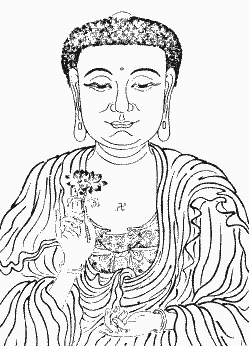

Buddhism is a spiritual tradition that focuses on personal spiritual development and the attainment of a deep insight into the true nature of life.
Buddhists seek to reach a state of nirvana, following the path of the Buddha, Siddhartha Gautama, who went on a quest for Enlightenment around the sixth century BC.
There is no belief in a personal god. Buddhists believe that nothing is fixed or permanent and that change is always possible. The path to Enlightenment is through the practice and development of morality, meditation and wisdom.
Buddhists believe that life is both endless and subject to impermanence, suffering and uncertainty. These states are called the tilakhana, or the three signs of existence. Existence is endless because individuals are reincarnated over and over again, experiencing suffering throughout many lives.
It is impermanent because no state, good or bad, lasts forever. Our mistaken belief that things can last is a chief cause of suffering.
The history of Buddhism is the story of one man’s spiritual journey to enlightenment, and of the teachings and ways of living that developed from it.